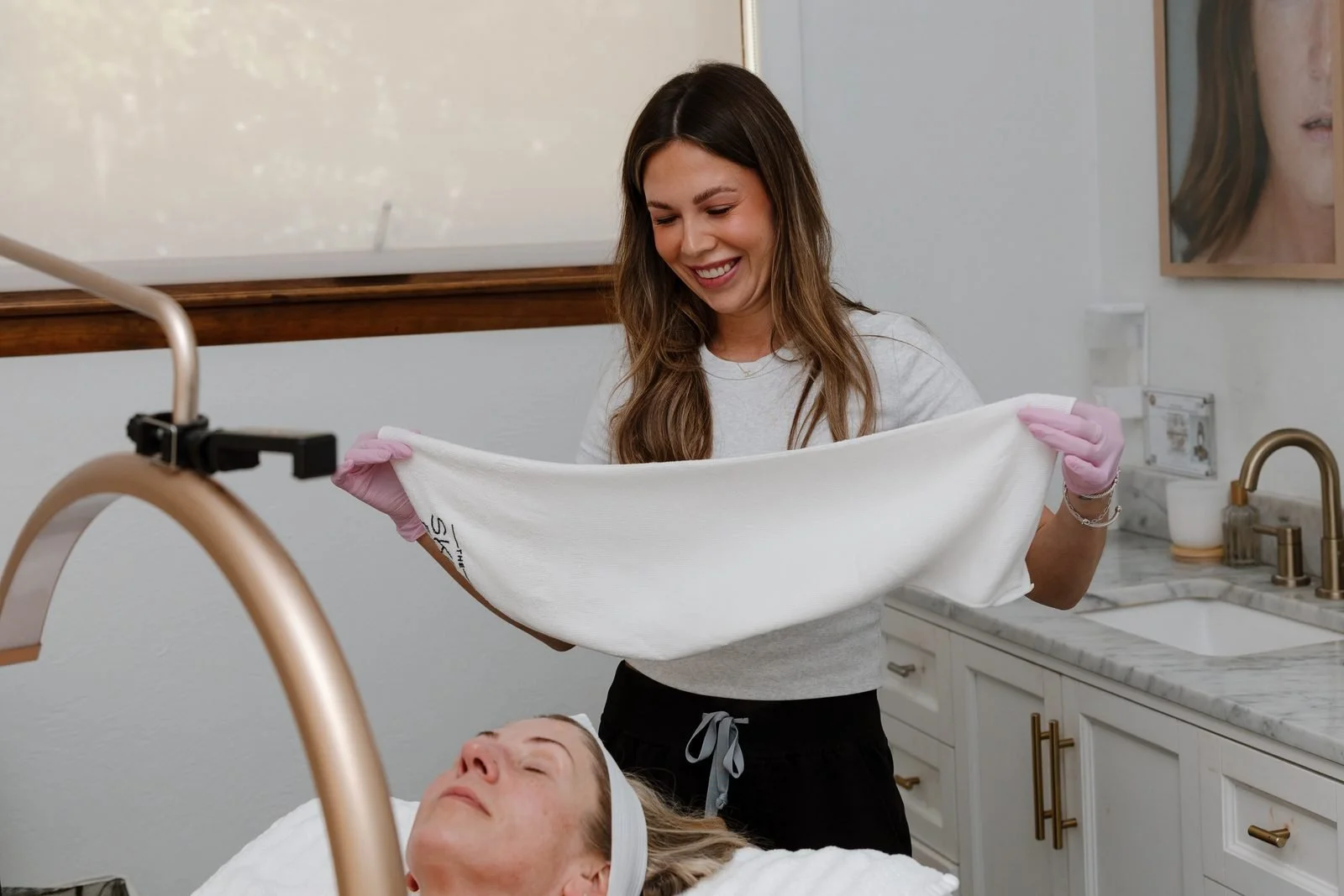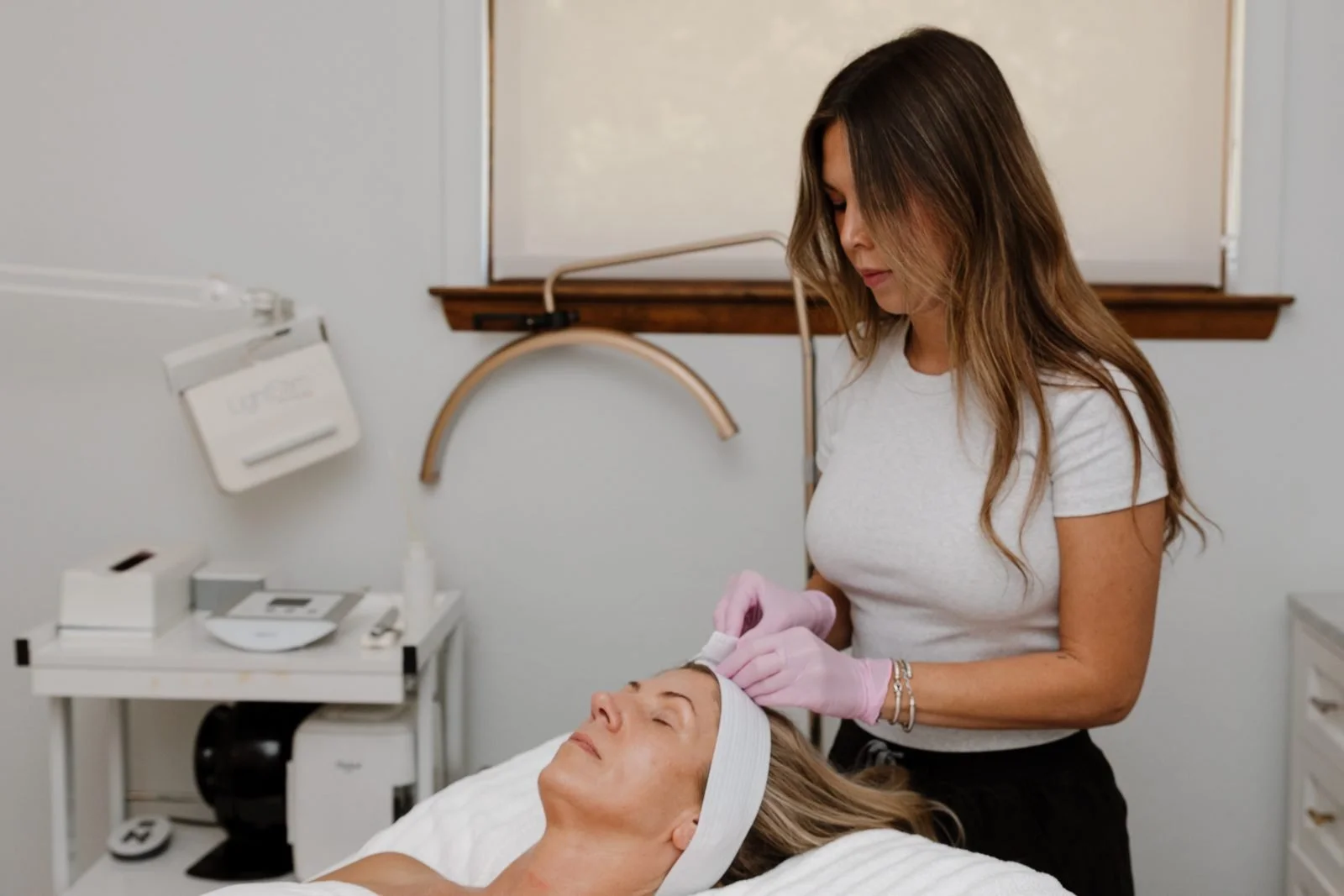
Most people do well with a professional facial every four to six weeks, because that's roughly how long skin takes to renew its surface. So how often should you get a facial for your own skin? It depends on your goal and the treatment. Maintenance facials follow that monthly rhythm, while enzyme therapy and peels work as a planned series.
By the team at THE SKIN FIX, Lake City, Florida. Published September 21, 2026.
That monthly number is a fine starting point, and it's the answer you'll find almost everywhere. It just leaves out the two things that shape a real schedule: what you want your skin to do, and which treatment you're having. Hailey Bowers, our owner and lead esthetician, sums up her approach in three words: "Prevention over correction." A facial schedule is how that idea gets put to work.
Why Do Most Estheticians Say Every 4 to 6 Weeks?
Your skin is always replacing itself. New cells form deep in the outer layer, travel up, and shed from the surface, and the trip takes about a month, according to Cleveland Clinic. A facial timed to that cycle meets a fresh surface each visit, so every appointment builds on the last one.
The cycle doesn't hold one speed for life. Renewal stays fairly steady through younger adulthood and then slows, most noticeably after about 50. One widely cited study found surface cells took more than 10 days longer to shed in older adults than in young adults. That's one reason the right answer at 35 may not be the right answer at 55, and we'll get to that below.
Timing is only half of it, though. A relaxing facial once a month and a results-focused treatment once a month are two very different plans.
Many of the women we see have had facials that felt lovely and changed nothing. Usually the schedule wasn't the problem. The treatment was never matched to a goal.
How Often Should You Get a Facial for Your Skin Goal?
Start with what you want your skin to do. The schedule follows from there.
| What you want your skin to do | A typical rhythm | How the plan usually looks |
|---|---|---|
| Stay healthy and hold the results you have | About every 4 to 6 weeks | A maintenance facial plus a steady home routine |
| Look brighter, with smoother texture | A short series, then maintenance | Peels or exfoliating treatments spaced so skin fully recovers between visits |
| Get back to calm, balanced function | A closer-together series at first | Enzyme therapy in a series, then monthly upkeep |
| Get ready for an event | Begin a few months ahead | Finish anything that may cause peeling well before the date |
These are general patterns, and none of them is a prescription. Your esthetician sets the real interval after looking at your skin, your home routine, and how your skin responded last time. Results are gradual, and they're individual.
If you aren't sure which row you're in, that's what a first visit is for. You can reach our Lake City clinic here and we'll sort it out together.
How Does the Schedule Change by Treatment?
"A facial" covers a lot of ground. Our signature facials menu lists each treatment separately because each one asks something different about your skin, and each has its own rhythm. If the names are new to you, our guide to the different types of facials sorts them by what they do.
A maintenance facial
The Perfect Fix is our 50-minute facial, and it's the one that fits the four-to-six-week rhythm best. Think of it as upkeep. It keeps skin clean, comfortable, and functioning well between bigger treatments, and it gives your esthetician a regular look at how your skin is changing. Small adjustments made monthly are the heart of prevention.
A DMK® Enzyme Therapy series of three
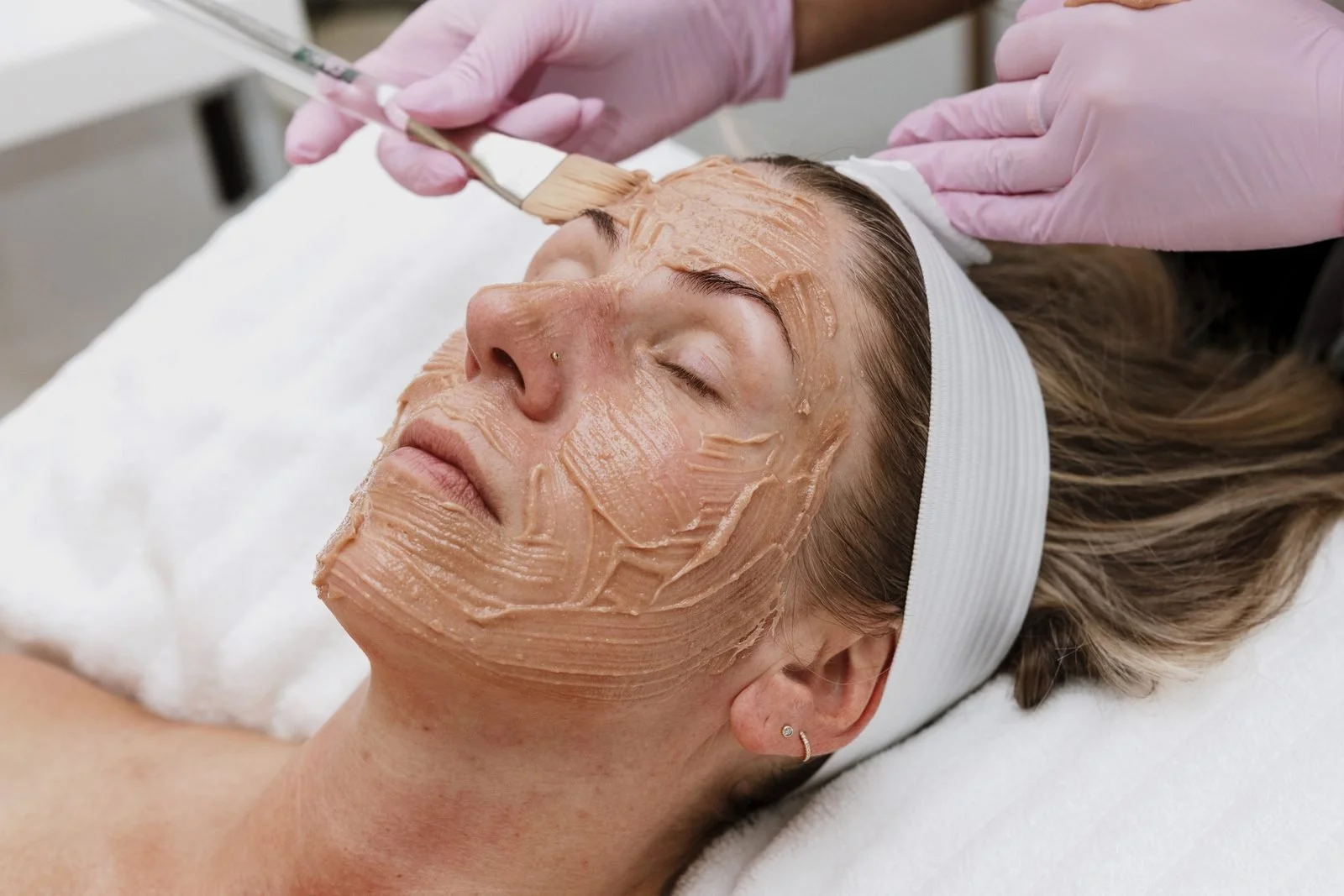
DMK® Enzyme Therapy is a 90-minute treatment, and it isn't a once-in-a-while facial. We offer it in packages of three because the work builds from one session to the next. Our approach is to bring skin back to healthy function before treating a specific concern, and enzyme therapy is often where that starts. It's also what we recommend before microneedling, to prepare the skin.
The spacing between sessions is set for you at your consultation, based on how your skin responds. After the series, the usual next step is a maintenance rhythm, with enzyme therapy repeated when your skin calls for it.
A peel series
Peels need recovery time built in. We offer two: the GetGlowing Micro-Peel, a 60-minute treatment, and BioRePeel, a 35% TCA peel that takes about 45 minutes. Like enzyme therapy, peels are offered in packages of three.
As general guidance, published clinical advice is that light peels may be repeated every 2 to 5 weeks, and that it can take 3 to 5 of them to see the result you're after. Deeper peels need longer gaps than gentle ones, and your skin should be completely settled before the next session. Peeling itself varies by skin type and is not guaranteed, so flaking is never the measure of whether a peel worked.
How Often Should You Get a Facial in Your 40s, 50s, and 60s?
Most advice on how often you should have a facial stops at skin type. Age matters too, because skin's pace changes. The aim in every decade is the same: give your skin what it needs to keep doing its job well. For treatment picks by decade, see our guide to the best facial for your 40s, 50s, and 60s.
In your 40s
This is the decade where consistency pays off most. Skin renewal is still fairly steady, which makes now the easiest time to build the habit. A facial every four to six weeks keeps the surface fresh and gives you a standing check-in with someone who knows your skin. One of Hailey's lines fits this decade well: "Invest in prevention now, so you don't have to invest in correction later."
In your 50s
Hormonal changes often arrive here. Skin makes less collagen in the years after menopause, and the drop-off is quickest in the first few years. Many women find their skin feels drier and takes longer to settle after a treatment. The monthly rhythm still works well, but the treatment mix often shifts: more focus on barrier support and hydration, and peels spaced with extra recovery time. A strong skin barrier makes every other treatment work better.
In your 60s and beyond
Skin is thinner and slower to recover, so the plan gets gentler and more deliberate. Regular visits still matter. We'd rather see you steadily for a treatment your skin enjoys than rarely for one that overwhelms it. Gentle options such as dermaplaning and LightStim® LED Light Therapy, both on our Radiance Boosters menu, can round out a facial without asking much of the skin.
What Should You Do Between Facials?
Here's the honest part: a monthly facial is about an hour out of the 700-plus hours in a month. Your home routine covers the rest. Hailey puts it this way: "Stay consistent with treatments and a good home routine to maintain healthy skin over time."
Three habits carry most of the weight:
- Wear sunscreen every day. Sun exposure drives most of the visible change in skin over time, and freshly exfoliated skin is more sensitive to it. Daily SPF protects the work you've paid for.
- Use what your esthetician recommended, the way she recommended it. We pair professional products with a consultation for this reason. The product has to suit your skin, not someone else's.
- Follow your aftercare. Freshly treated skin is more reactive for a few days. Our aftercare instructions cover what to do after each treatment.
Frequently Asked Questions
How long do facial results last?
The fresh, bright look after a maintenance facial usually holds for a few days to a couple of weeks. The deeper benefits last longer because they build over repeated visits. How long your own results hold depends on your skin, the treatment, and your home routine between appointments.
Does a facial really make a difference?
A single relaxing facial mostly feels good. A facial that's matched to a goal, repeated on a steady schedule, and backed by a home routine can make a visible difference over time. Results are gradual and vary from person to person, which is why we plan treatments around your skin.
What should you not do after a facial?
Skip exfoliating acids, scrubs, and retinoids until your skin has settled, stay out of direct sun, and don't pick at any flaking. Your esthetician will give you instructions specific to your treatment, and peels come with stricter rules than a maintenance facial.
Can you get facials too often?
Yes. Skin needs time to recover, especially after exfoliating treatments and peels. Booking them too close together can leave skin irritated and reactive, which works against the healthy function you're building. The right interval is the one your skin can recover from.
How often should you have a facial if you're just starting?
Begin with a consultation so the first treatment fits your skin. A common starting point is a monthly maintenance facial, or a series of three if there's a specific goal, adjusted from there. We see clients from Lake City, Live Oak, Lake Butler, and Gainesville, and no two of them have the same schedule.
Set Your Schedule With Your Esthetician
Every four to six weeks is a good default. Your best schedule comes from your goal, your treatment, and where your skin is right now, and it should change as your skin does. Our team of estheticians will look at your skin, explain the reasoning behind each recommendation, and map out a rhythm you can keep.