DMK® Enzyme Therapy Explained: What the Mask Does and How It Feels
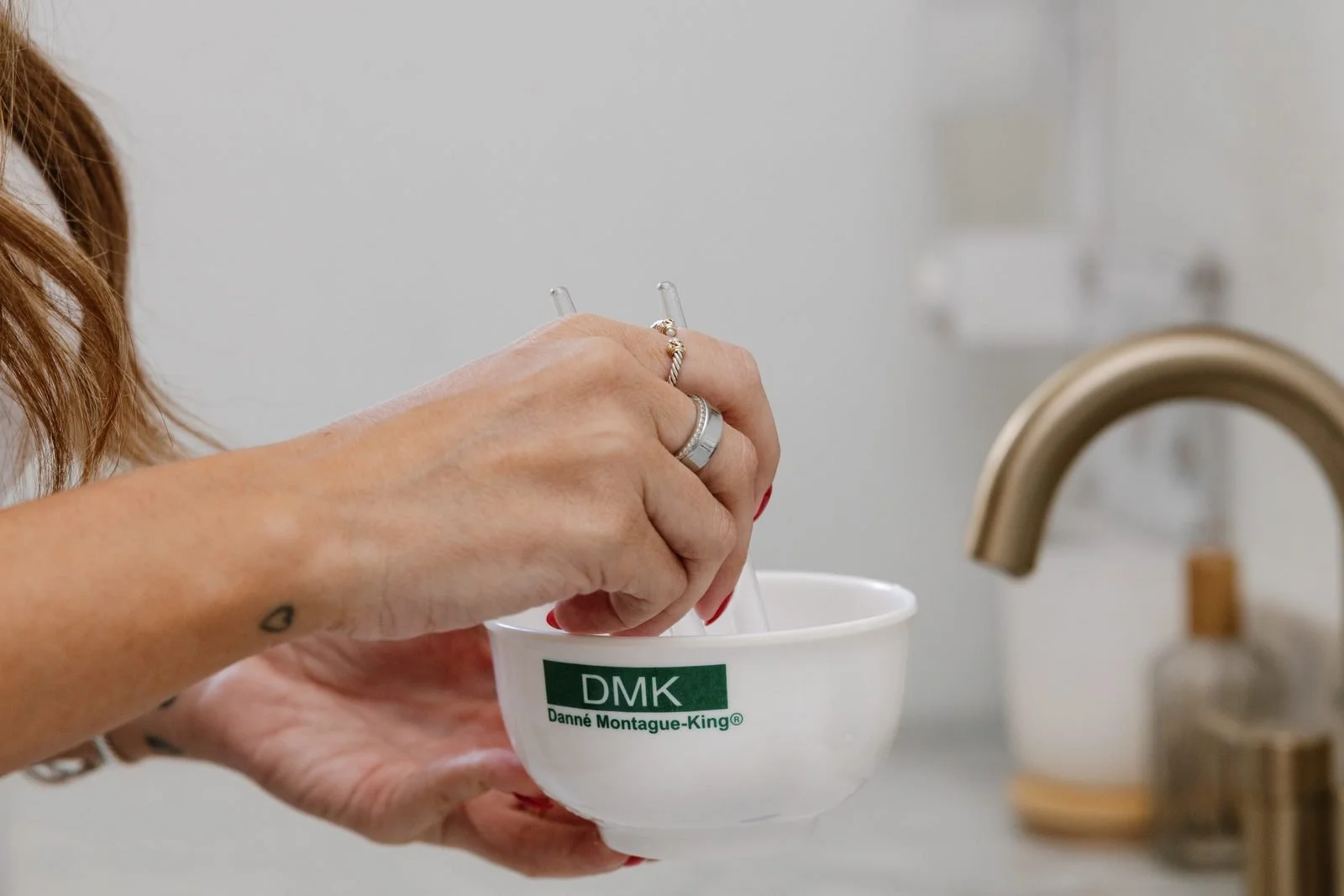
DMK® Enzyme Therapy is a 90-minute professional skin treatment built around an enzyme mask that sets firm on your skin. DMK, the manufacturer, says the mask boosts circulation and lymphatic drainage while it loosens dead cell buildup. You feel tightening, then a steady pulsing. Results build gradually, so we plan it as a series of three.
If you've had facials that felt lovely and changed nothing, DMK Enzyme Therapy will feel different within the first few minutes of mask time. Some people find it by searching for a DMK facial or an enzyme therapy facial. It's the same treatment, and most of what's written about it online reads like a chemistry handout. Here's how we'd explain it if you were sitting in our treatment room in Lake City.
What Is DMK® Enzyme Therapy?
It's the signature professional treatment from DMK, a skincare company whose whole approach is getting skin to work the way healthy skin works. DMK describes its method in four steps: remove, rebuild, protect, and maintain. The enzyme mask sits at the center of the first two.
That lines up with how we work at THE SKIN FIX. We bring skin back to healthy function first, and then we treat the concern you came in for. Skin that's working well responds better to everything else you do for it, at the clinic and at home.
Three things set it apart from the facials most people have had:
- It's long. We book 90 minutes, and a good share of that is mask time.
- The mask sets firm. It hardens as it dries, and you'll feel it.
- It's planned as a series. We sell it in packages of three, because one visit is a start and three visits are a plan.
You can see how it sits alongside our other treatments on the signature facials page, which is where the treatment is listed today.
What Does the Enzyme Mask Do?
Start with the word itself. Enzymes are proteins that speed up natural processes in the body. DMK says its mask uses them to do two jobs at once.
The first job is clearing buildup. DMK's pages use words like hydrolysis and reverse osmosis. In everyday terms, the company says the enzymes break down the dead cell material sitting on your skin so it can be rinsed away. DMK also points out that enzymes don't rely on pH the way acid treatments do, which is why the company calls the treatment a fit for reactive skin.
The second job happens underneath. According to DMK, the mask signals your body to increase blood circulation, oxygenation, and lymphatic drainage, and to stimulate collagen production. Lymphatic drainage is your body's way of moving fluid and waste away from tissue. Collagen is the protein that keeps skin firm.
Then there's the part that shows up in every photo. When the mask comes off, you may see a fine network of flushed lines across your face, neck, and chest. DMK calls this the Plasmatic Effect and describes it as a dilation of the capillaries, which are your smallest blood vessels, appearing temporarily on the treated area. DMK says it usually disappears within a few hours.
It looks dramatic in pictures. In person it's short-lived, and DMK treats it as the sign that the mask did its work.
One honest note. Everything in this section is the manufacturer's description of how the treatment works, and we're passing it along as exactly that. The DMK enzyme therapy benefits the company lists include brighter skin, better hydration, and calmer inflammation. What we can speak to ourselves is what happens in the room and how we plan your series.
What Does DMK Enzyme Therapy Feel Like?
This is the question the brand pages skip. The details below are the typical experience as DMK and its providers describe it, so you know what to expect before your first visit.
- Your skin is prepped. DMK says its estheticians combine different formulations for each client before the mask goes on, so this step won't be identical for everyone.
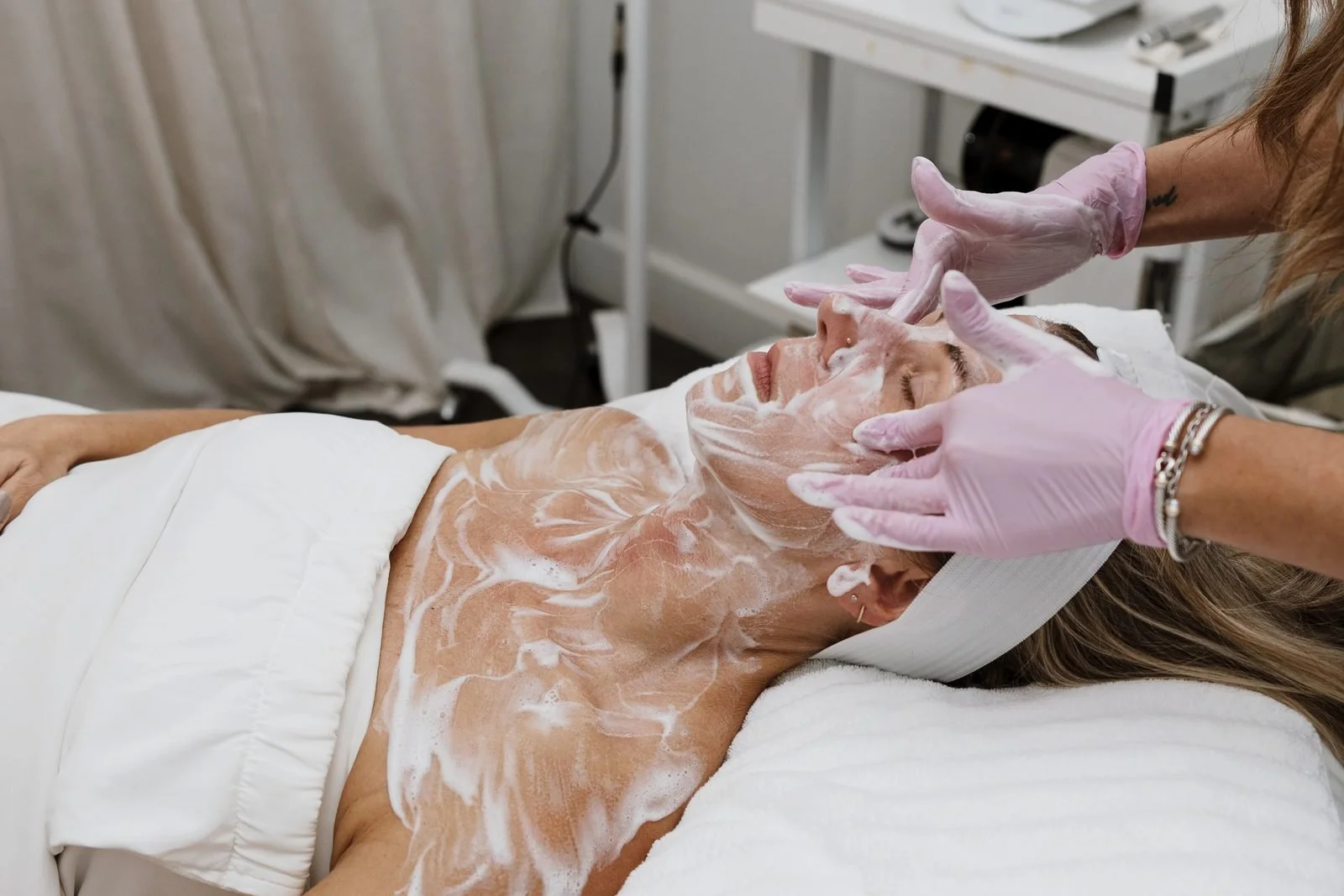
- The mask goes on. It covers the face and usually the neck, often down to the upper chest.
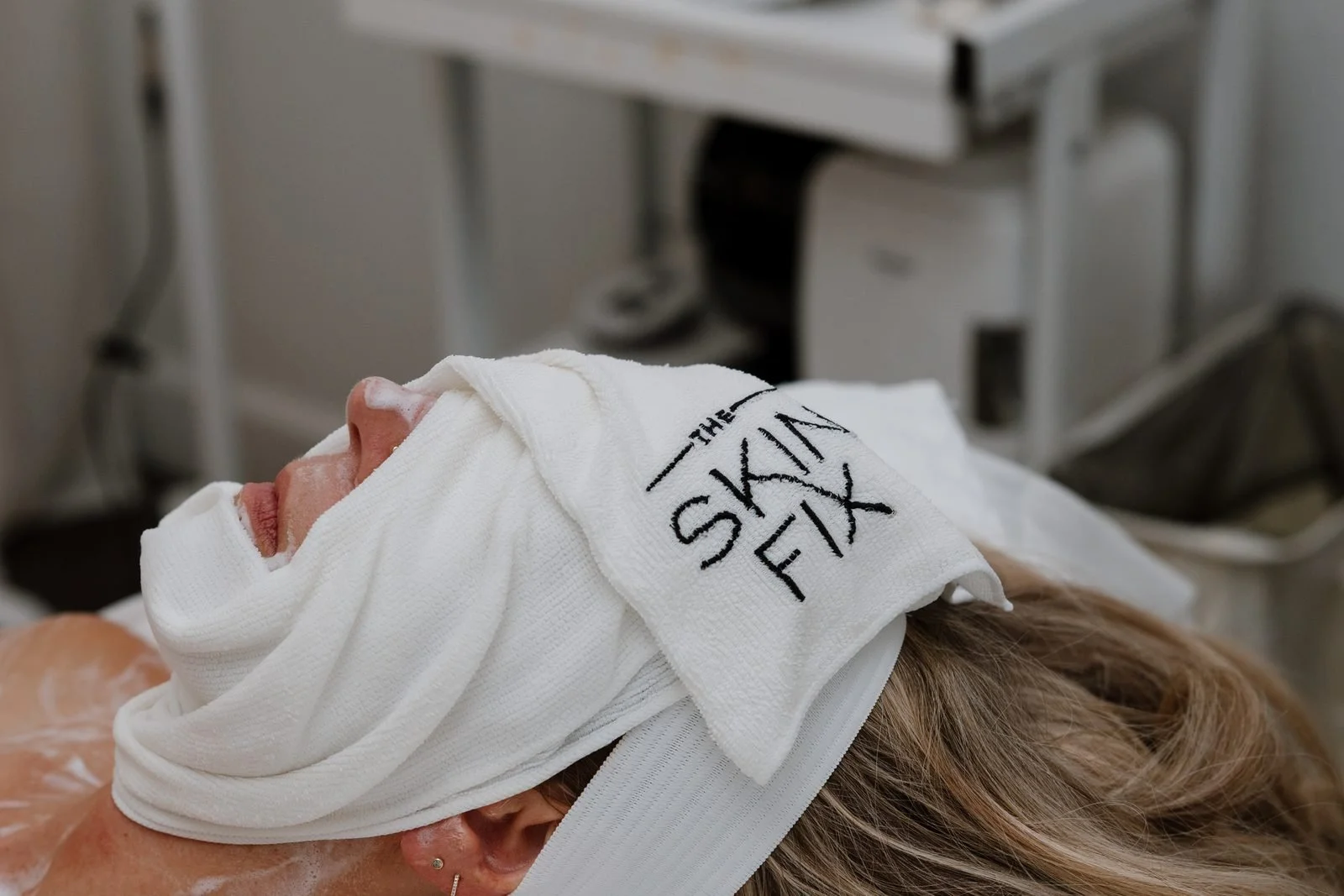
- It tightens. As the mask dries it sets hard, and you feel steady pressure on your skin.
- It pulses. DMK describes some itching at first, then a regular pulsing as your own body temperature activates the enzymes.
- It stays on a while. DMK's materials point to about 45 minutes of mask time.
- It comes off. The mask is softened and removed, and that's when you may see the Plasmatic Effect.
Knowing about the tightness ahead of time makes the first visit much easier. If a firm mask over your face sounds like a lot, tell your esthetician before you begin. It's a common concern, and it's far better to talk it through up front than to find out halfway in.
And yes, the room is calm and you'll be comfortable. But relaxation is the setting here. The result is the point.
Who Is DMK Enzyme Therapy Suitable For?
Our treatment menu lists DMK Enzyme Therapy as suitable for all skin conditions, including:
- Acne
- Rosacea
- Signs of aging
- Sun damage
- Pigmentation
- Inflammation
"Suitable for" is a careful phrase, and we use it on purpose. It means the treatment can be part of a plan for skin with those concerns. It doesn't mean one mask settles any of them. Skin changes slowly, and every face responds on its own schedule.
Many of our clients are women in their 40s and 50s who want skin that looks rested, feels firm, and holds up over time. For that goal, a treatment built around skin function makes sense as a starting point. Hailey Bowers, our owner and lead esthetician, has worked at the clinic for nearly seven years, and her philosophy is "prevention over correction." Enzyme therapy fits that thinking: look after how the skin works now, so there's less to correct later.
The right first step is a conversation. Tell us about your skin history, what you use at home, any medications, and recent sun exposure. We're estheticians at a paramedical skin revision clinic, so our job is to assess your skin, explain our reasoning, and build a treatment plan you understand.
What Do Results Look Like Across a Series of Three?
Gradual. That's the truthful one-word answer, and it's why we sell DMK Enzyme Therapy in packages of three.
- Treatment one is an introduction. We see how your skin responds, and you learn what the mask feels like. In the days after, you may notice your skin looks brighter and feels smoother.
- Treatment two builds on the first. We know more about your skin by now, and you know what to expect.
- Treatment three is where a series earns its name. With three visits behind you, there's enough change to compare against where you started.
How much change, and how fast, is individual. Your skin's starting point, your home routine, and your sun habits all play a part. We'd rather tell you that now than promise a timeline nobody can guarantee.
Photos help, because day-to-day change is hard to see in your own mirror. We're putting together a before-and-after look at a full enzyme therapy series so you can see what three treatments can look like.
What you do between visits matters as much as the visits. Hailey puts it this way: "Stay consistent with treatments and a good home routine to maintain healthy skin over time." A series works best as the beginning of ongoing care.
Why Do We Recommend Enzyme Therapy Before Microneedling?
On our treatment menu, we recommend starting with a DMK Enzyme Therapy treatment before Exceed microneedling to prep and condition the skin. Microneedling uses very fine needles to create tiny channels in the skin, which prompts the skin's own repair response.
The reasoning is the same one behind everything we do. Healthy function comes first. Skin that's been conditioned is better prepared for a treatment that asks it to repair and rebuild. If microneedling is on your list, expect us to talk about enzyme therapy as step one.
What Should You Not Do After an Enzyme Facial?
Keep the first day simple. Our aftercare guidelines for facials come down to three things:
- Skip makeup and heavy products for 24 hours.
- Stay out of the sun and avoid heat. That includes saunas, hot workouts, and very hot showers.
- Hydrate, inside and out. Drink water and keep your skin moisturized with the products we recommend.
If you still see some flushing from the Plasmatic Effect when you leave, don't worry about it and don't try to scrub or treat it. DMK says it fades on its own, usually within a few hours. Your esthetician will also give you instructions specific to your skin and the products you use at home, and those come first.
Frequently Asked Questions
Is DMK enzyme therapy worth it?
It depends on what you're paying for. If you want a relaxing hour, this isn't the best use of your money. If you want your skin to change and you're willing to commit to a series and a home routine, we think it's the strongest place to start, because it works on how your skin functions before anything else.
How often should you have DMK enzyme therapy?
We sell DMK Enzyme Therapy in packages of three, and the spacing between visits is set at your consultation based on how your skin responds. After the first series, we'll talk about a maintenance rhythm that fits the rest of your plan. Our post on how often to get a facial covers the general thinking.
How much does DMK enzyme therapy cost?
Cost depends on whether you book a single treatment or a package of three, and on anything added to your visit. We don't quote prices in blog posts because they can change. Current pricing is listed with the treatment on our facial treatment menu.
Does DMK enzyme therapy have side effects or downtime?
The best-known DMK enzyme therapy side effects are temporary. DMK describes itching and pulsing while the mask is on, and the Plasmatic Effect afterward, which the company says usually fades within a few hours. Skin responses vary, so tell us about sensitivities, medications, and recent sun before we begin.
How long do DMK enzyme therapy results last?
There's no single answer, because it depends on your skin, your home routine, and how you handle the sun. Skincare here is ongoing care. That's why we plan a home routine and maintenance visits with you instead of treating a series as the finish line.
